Dietary Software for Nursing Homes, Skilled Nursing, and Assisted Living
Dietech holds each resident's diet order, allergies, dislikes, textures, and adaptive equipment on one record, builds menu cycles against it, prints tray tickets that carry all of it to the line, tallies production from real selections, and keeps the weights, intake, and assessment documentation a state survey asks for.
How the dietary department runs on it
From the resident record through to the documentation a surveyor asks to see.
- 1
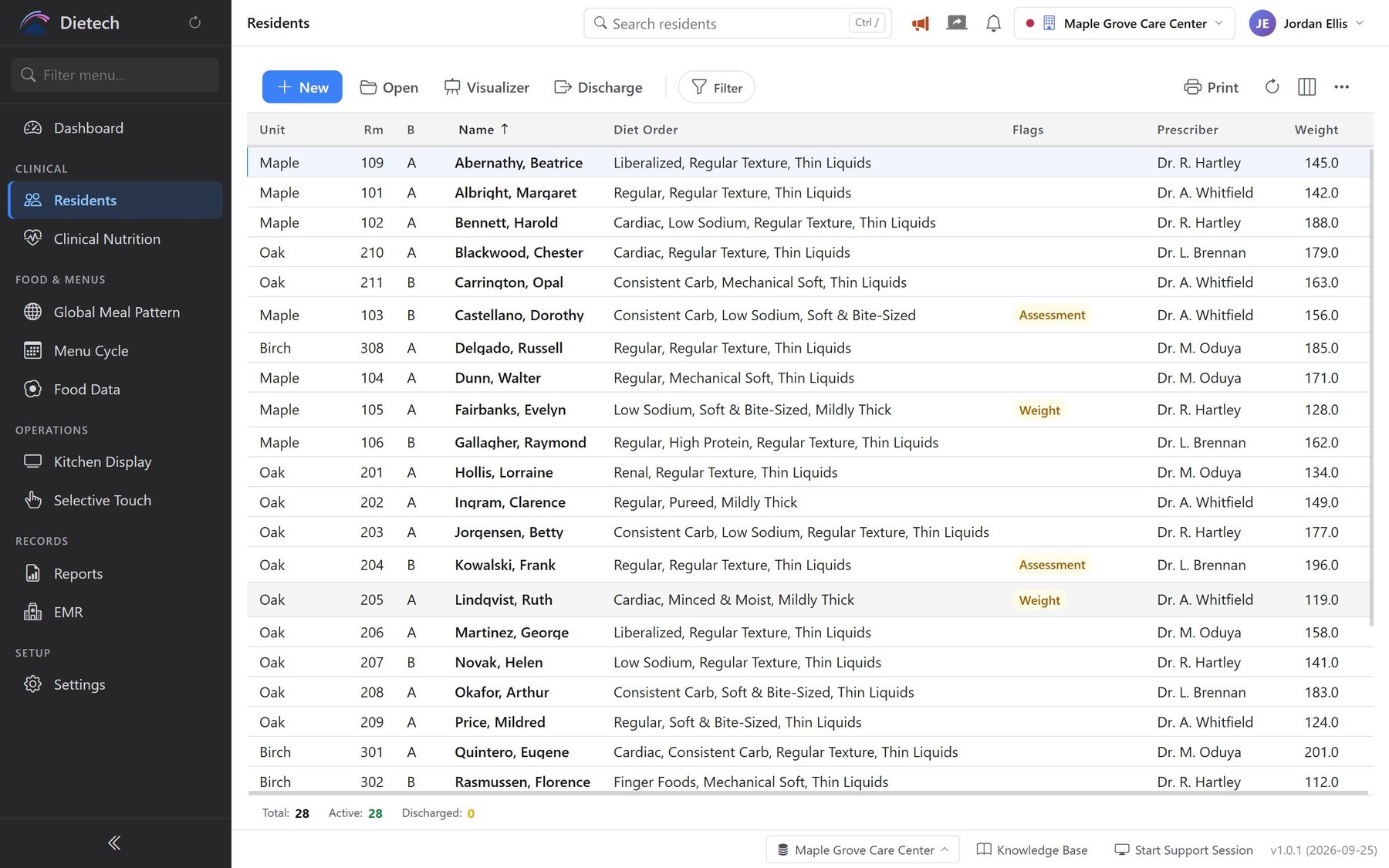
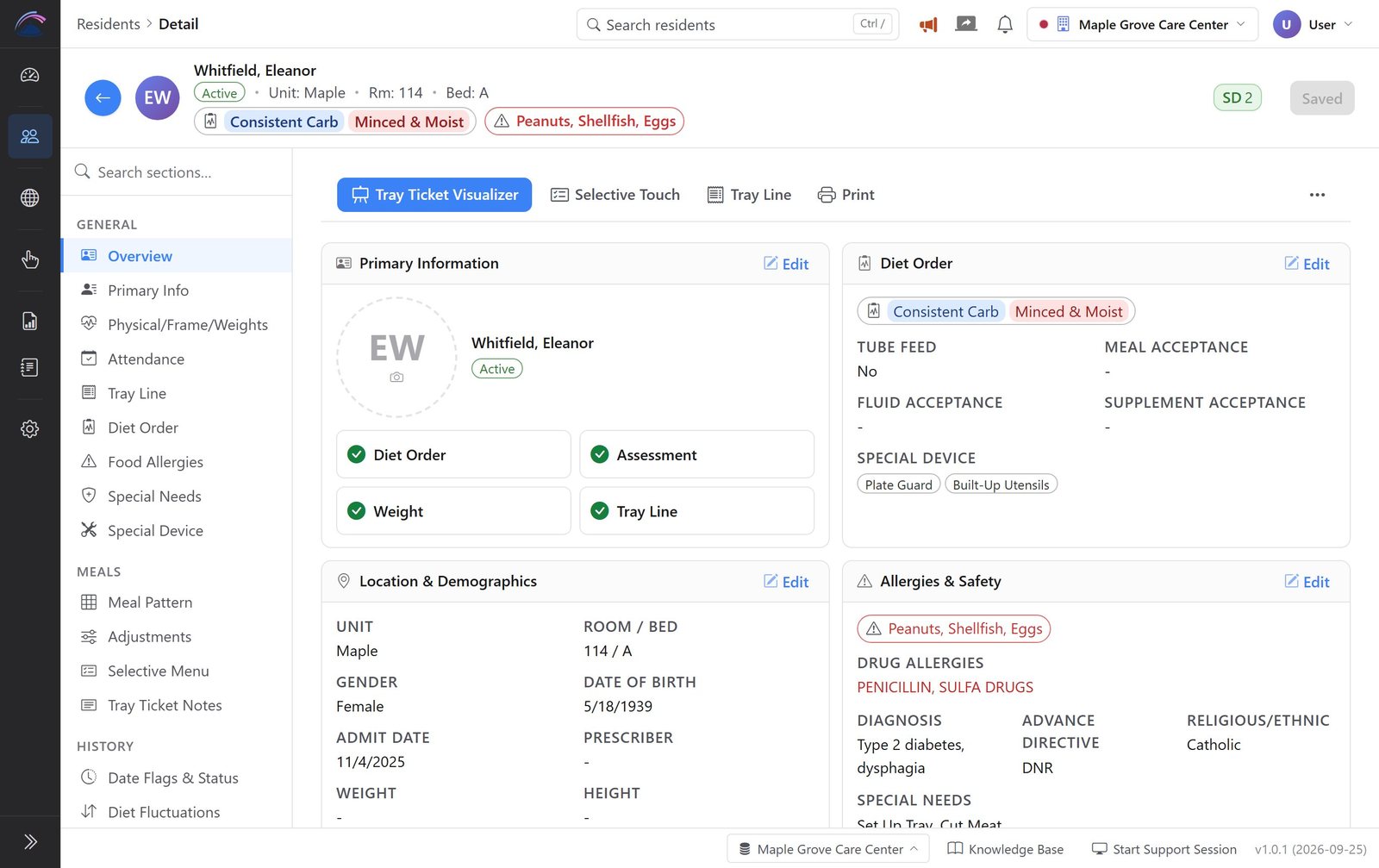
The resident record is built once
Diet order, texture and fluid consistency, allergies, dislikes, adaptive equipment, and special needs are held together. Where a PointClickCare or MatrixCare interface is in place, diet changes arrive from the EMR rather than being retyped.
- 2
The menu cycle is set
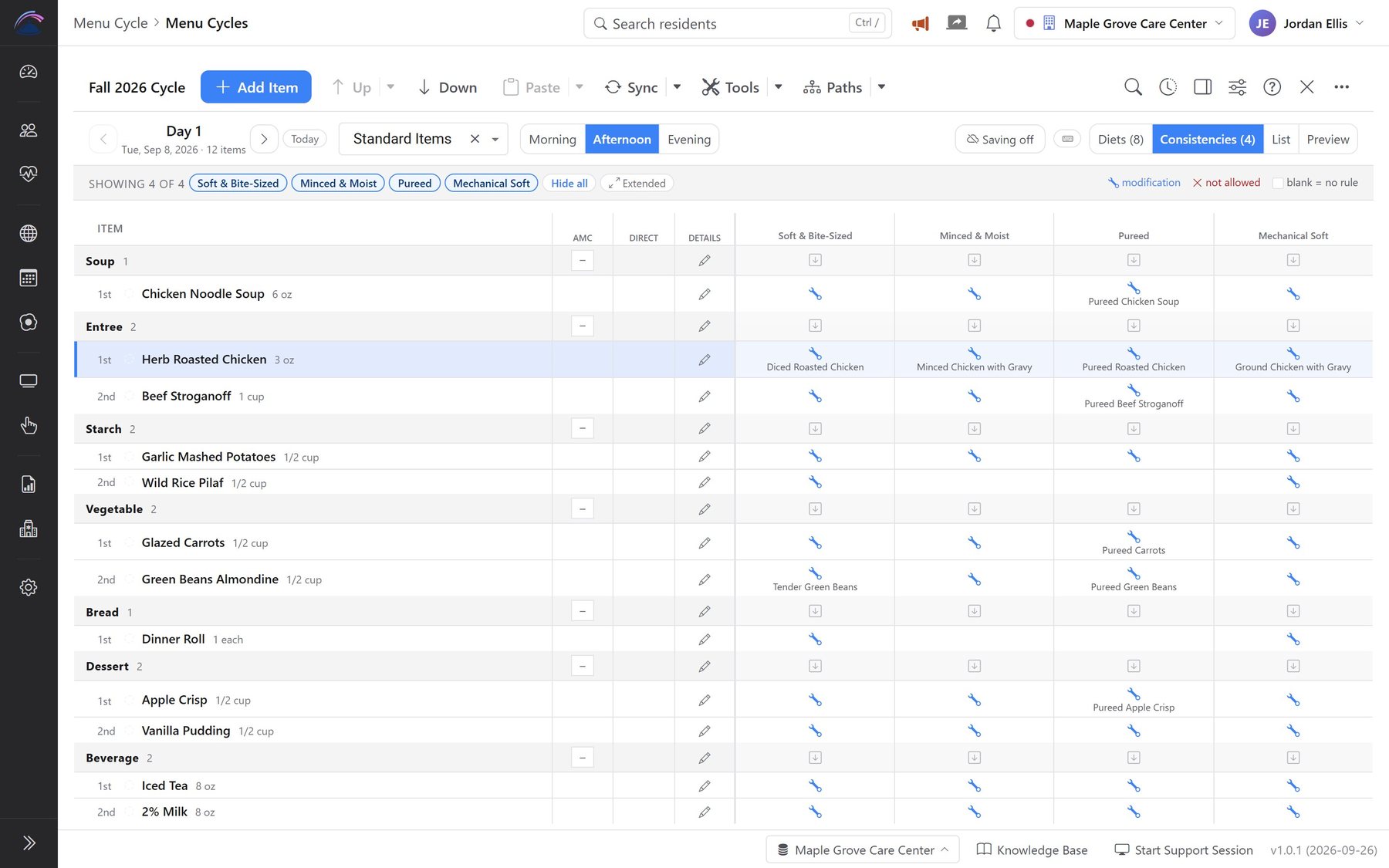
Menu cycles run across seasons, holidays, and selective options, with recipes, portions, and nutritional values attached. Changes propagate rather than being edited meal by meal.
- 3
Selections are taken
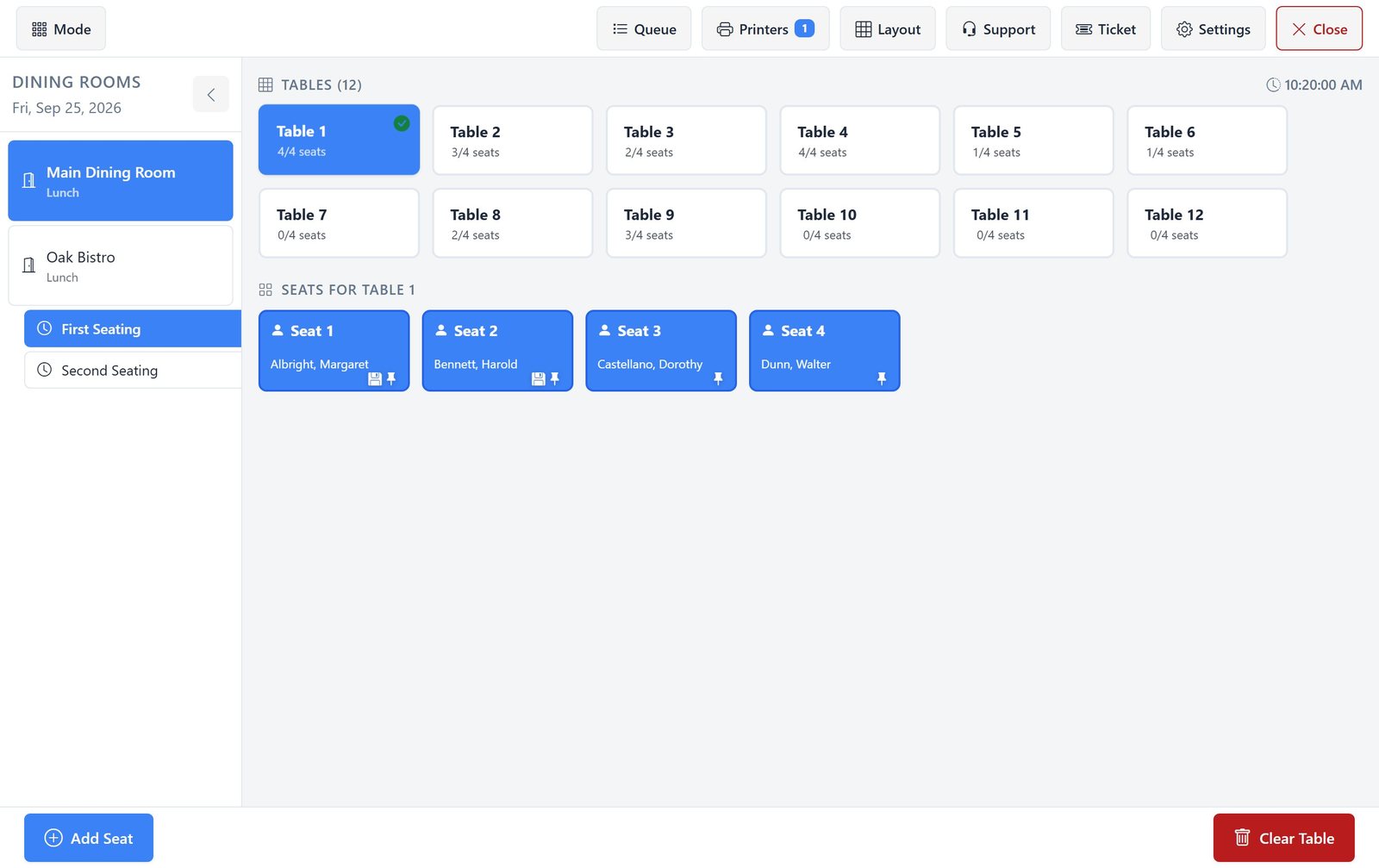
Dining room orders are taken on the Selective Touch screen by table and seat, with always-served standing items applied automatically and dislike prompts raised before an item is accepted.
- 4
Tray tickets print
Each ticket carries the diet, texture, fluid consistency, allergies, adaptive equipment, cart and tray number, and table location, so the tray line and the servers see the same information.
- 5
Production is tallied
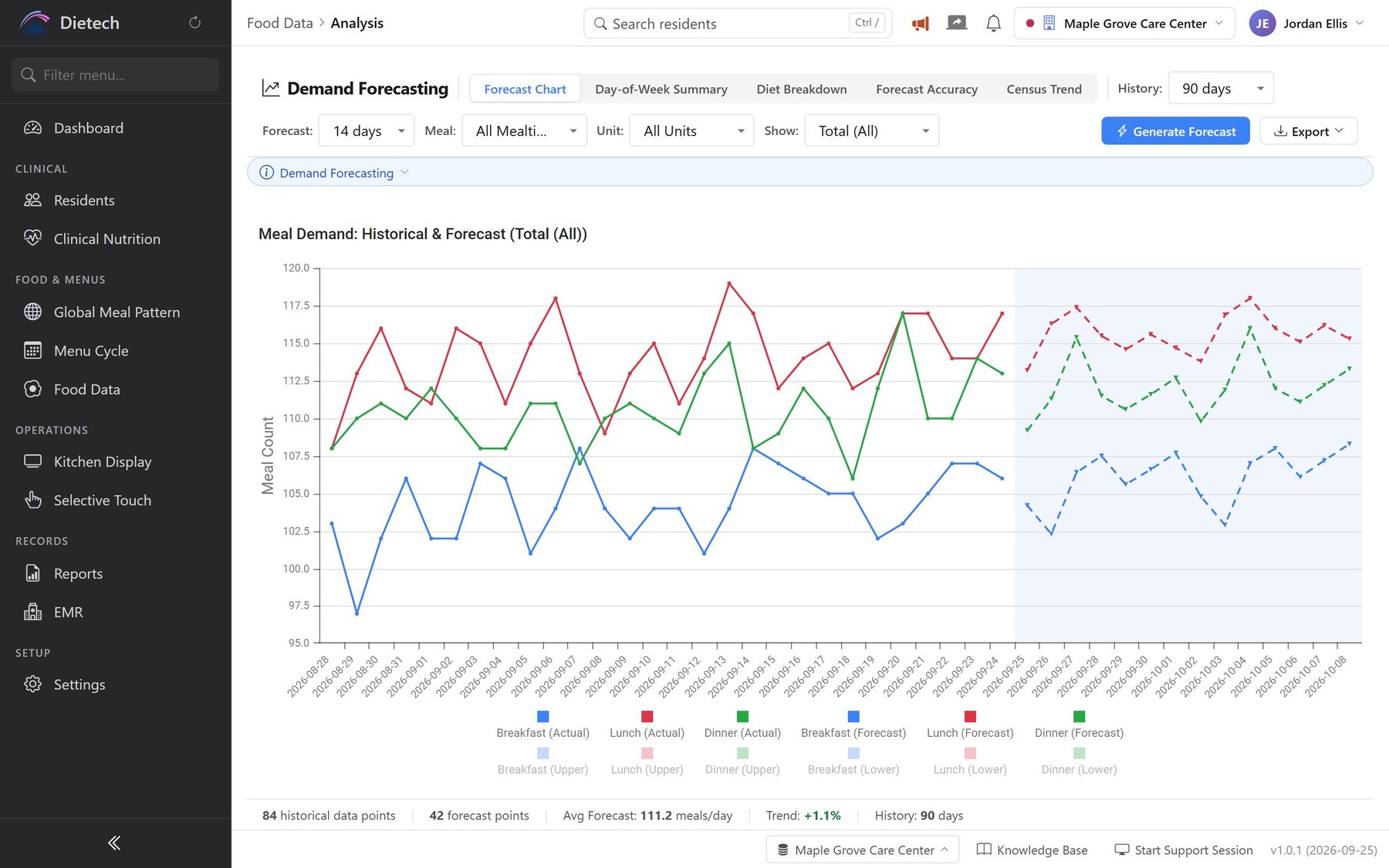
Production tallies count what actually needs preparing from real selections and census, rather than from an estimate that leaves the kitchen over-producing to be safe.
- 6
Clinical work is documented
Weights, intake and meal acceptance, nutritional assessments, tube feeding, and plan of care are recorded in the same system, ready for review and for state survey.
In the dining room
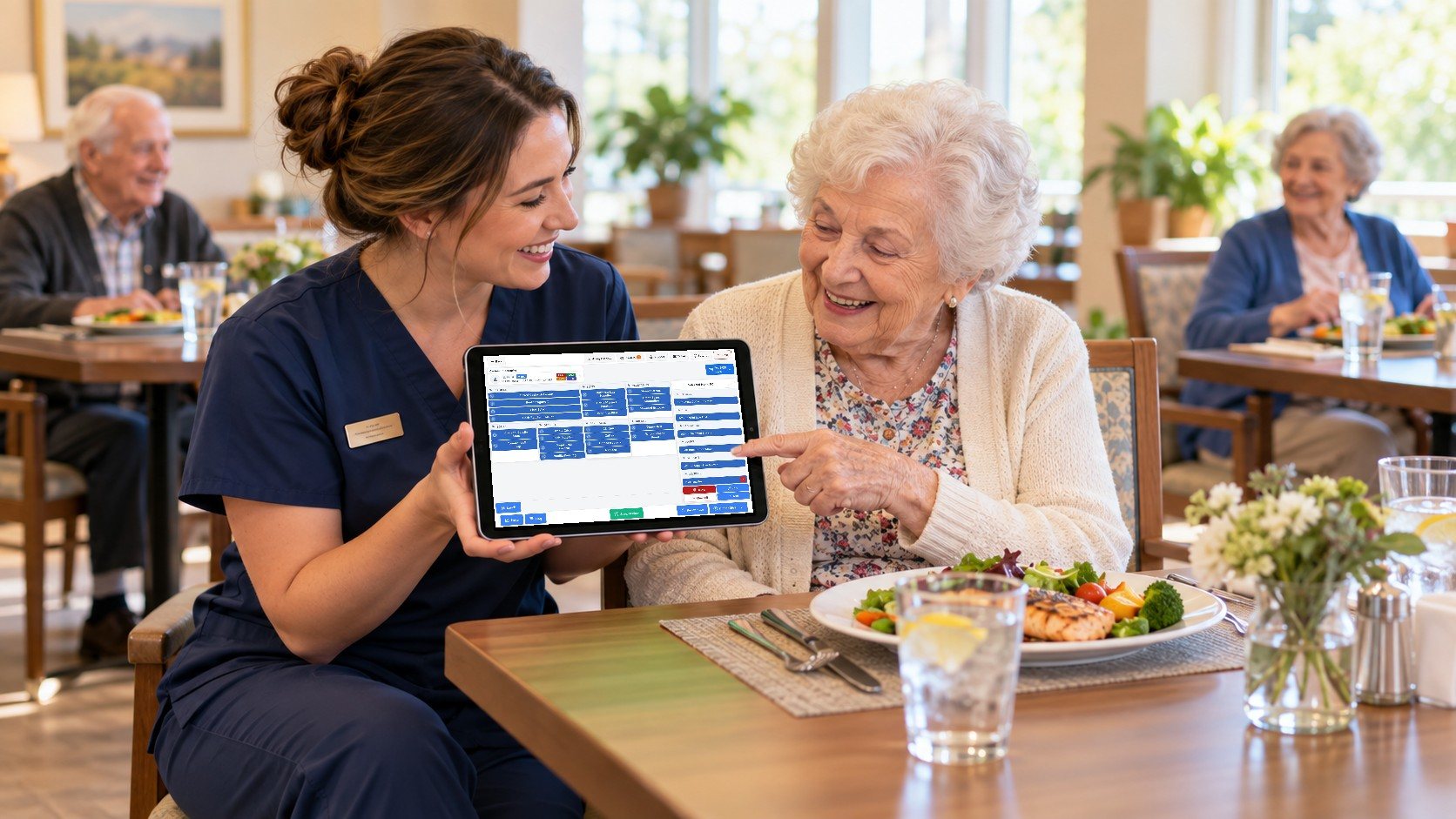
Orders taken at the table, from a menu built for each resident
Dining room staff carry a tablet from table to table. Each resident's menu already reflects their diet order, texture and allergies, so the choices they are shown are ones they can have.
- Tables, seats and residents on the tablet
- Allergies and never-serve items applied to the menu
- Orders go straight to the kitchen
The dietary department, screen by screen
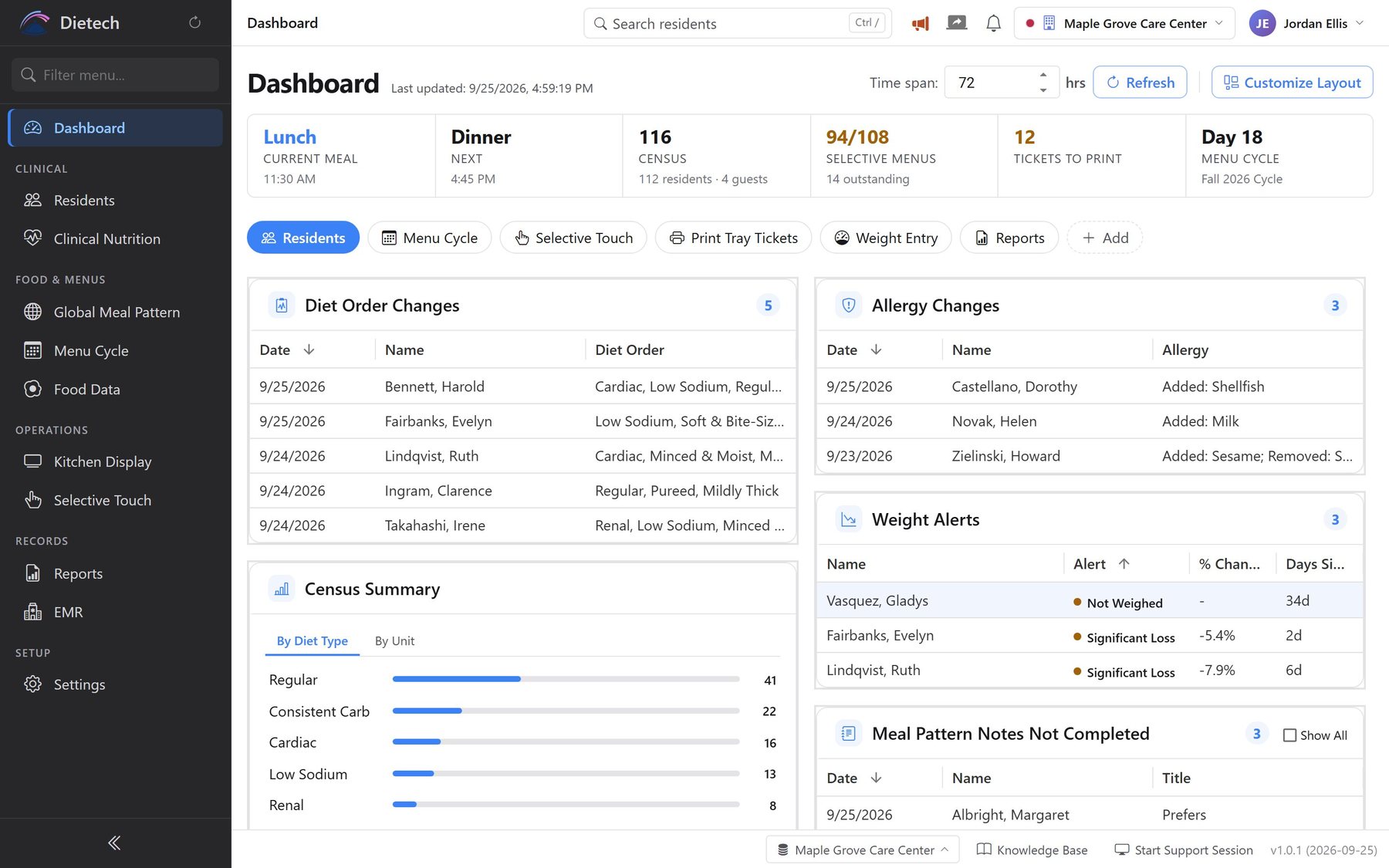
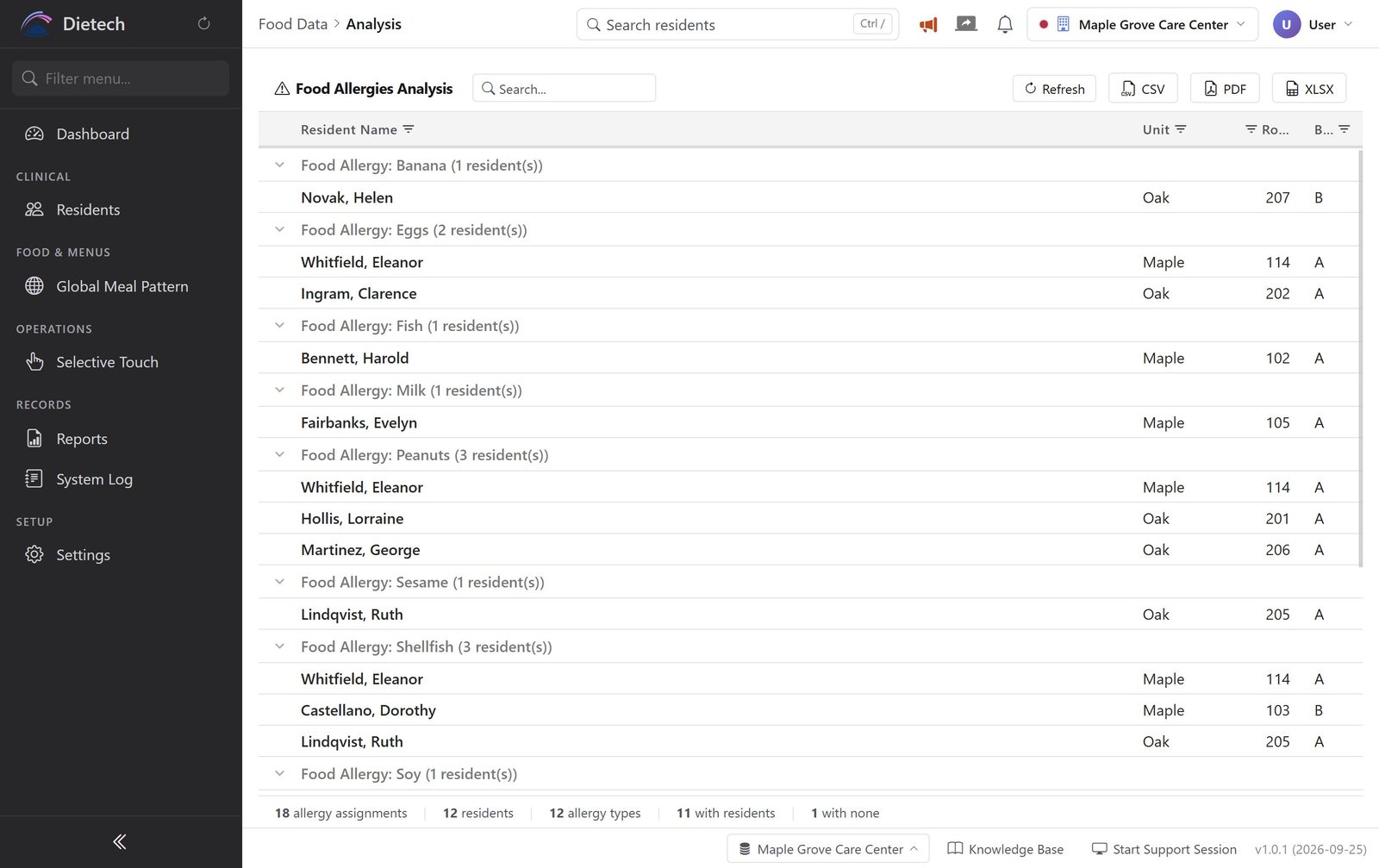
Real screens from Dietech, shown with sample residents and a sample menu.
Built for everyone in the dietary department
Dietary manager
Runs the department from one screen instead of binders and spreadsheets.
- Diet order, allergy and weight changes on the dashboard
- Menu cycles planned once for every diet and texture
- Tray tickets and production counts from the same data
Dining room staff
Take each resident's order at the table, from a menu already built for them.
- Tables, seats and residents on a tablet
- Menus limited to what each resident may have
- Always-served items added automatically
Cooks and tray line
Know what to prepare and who each tray is for.
- Production counts by diet and texture
- Live kitchen display with allergies on every card
- Tray tickets with texture and equipment printed
Dietitians and consultants
Keep assessments and weights on track across the building.
- Weight alerts and significant changes
- Nutrient totals as meals are chosen
- Assessments due flagged on the resident
Families and residents
Choose meals themselves where the facility allows it.
- Order from a phone or tablet through a secure link
- Only items within the diet order are offered
- Guest trays for visiting family
Corporate and multi-site
Compare facilities without logging into each one.
- Menu compliance across every facility
- Switch facilities from one sign-in
- Census and activity by facility
What long-term care facilities use
Food service and clinical nutrition in one system, rather than a kitchen product bolted to a clinical one.
| Capability | Detail |
|---|---|
| Diet orders & changes | Therapeutic diets, texture modification, and fluid consistency, with automated diet change handling across meal services |
| Allergies & dislikes | Allergies, intolerances, dislikes, and never-serve items enforced at selection and printed on the tray ticket |
| IDDSI | IDDSI texture and drink thickness levels applied to menus, tickets, and ordering screens |
| Menu cycles | Seasonal, holiday, selective, and independent living cycles with recipes, portions, and nutritional values |
| Tray tickets | Configurable tickets carrying diet, texture, allergies, adaptive equipment, cart, tray, and table location |
| Production tallies | Counts driven by actual selections and census so the kitchen prepares what is needed |
| Dining room service | Selective Touch ordering by table and seat, with live nutrient meters and always-served items |
| Weights & intake | Weight entry and significant gain or loss tracking, meal and nourishment acceptance, and intake studies |
| Clinical documentation | Nutritional assessments, tube feeding protocols, plan of care, and PDPM assessment support |
| Nutritional analysis | Nutrient analysis across recipes, menus, and individual residents |
| Purchasing & cost | Order guides, inventory, invoice matching, menu costing, and cost per resident day |
| Survey readiness | Documentation and reporting retained so the dietary department can evidence what it did and when |
Frequently asked questions
EMR integration, survey readiness, IDDSI, resident choice, and food waste.
What is dietary software for a nursing home?
Dietary management software runs the food service and clinical nutrition side of a long-term care facility: it holds each resident's diet order, allergies, textures and preferences, builds menu cycles, prints tray tickets, tells the kitchen how much to produce, and records weights, intake and nutritional assessments. Dietech covers all of that in one system, from Dietech Lite for small facilities up to Dietech Production for large and multi-site organisations.
Does Dietech integrate with PointClickCare and MatrixCare?
Yes. Dietech integrates with major long-term care EMR systems including PointClickCare and MatrixCare, and is listed in the PointClickCare Marketplace. Diet orders and resident data flow from the EMR rather than being maintained twice, which removes the most common source of a resident being served against a diet that was changed on the nursing side but never reached the kitchen.
How does Dietech help with state surveys?
By keeping the record as work happens rather than assembling it afterwards. Diet orders and changes, allergy records, weights and significant gain or loss, meal and nourishment acceptance, nutritional assessments, and plan of care documentation are all retained and reportable. Facility-wide reports covering food allergies across the census, special needs, special devices, and weight changes are the ones surveyors usually ask for.
Does Dietech support IDDSI textures?
Yes. IDDSI texture levels and drink thickness are applied to menus, enforced at ordering, and printed on tray tickets alongside the diet order, so a soft and bite-sized meal with mildly thick liquids is unambiguous to everyone from the cook to the server.
What size facility is Dietech for?
It scales across three programs. Dietech Lite covers small facilities up to around 100 residents with meal ticketing, preferences and allergies. Dietech Plus adds menu cycles, tube feeding, weight management, nutritional analysis and production tallies for mid-size facilities. Dietech Production adds EMR integration, selective menus, bedside ordering, assessments and multi-facility support with no resident limit.
Can residents choose their own meals?
Yes, in several ways. Staff take selections on the Selective Touch touchscreen in the dining room, residents can order at a bedside screen through eTableServ, and more independent residents or their families can order through self-order on their own phone or tablet, from a secure link. All three respect the same diet order, allergy record and dislikes.
How does it reduce food waste?
Production tallies are calculated from actual resident selections and current census rather than from an estimate, so the kitchen prepares to real demand instead of over-producing as insurance. Recording dislikes and meal acceptance also improves what gets offered in the first place, which cuts plate waste as well as kitchen waste.
Explore the capabilities
See it on your own residents and menu
We will set up a demonstration with your diets, your menu cycle, and your tray ticket layout, and walk your dietary manager through the parts they will use every day.